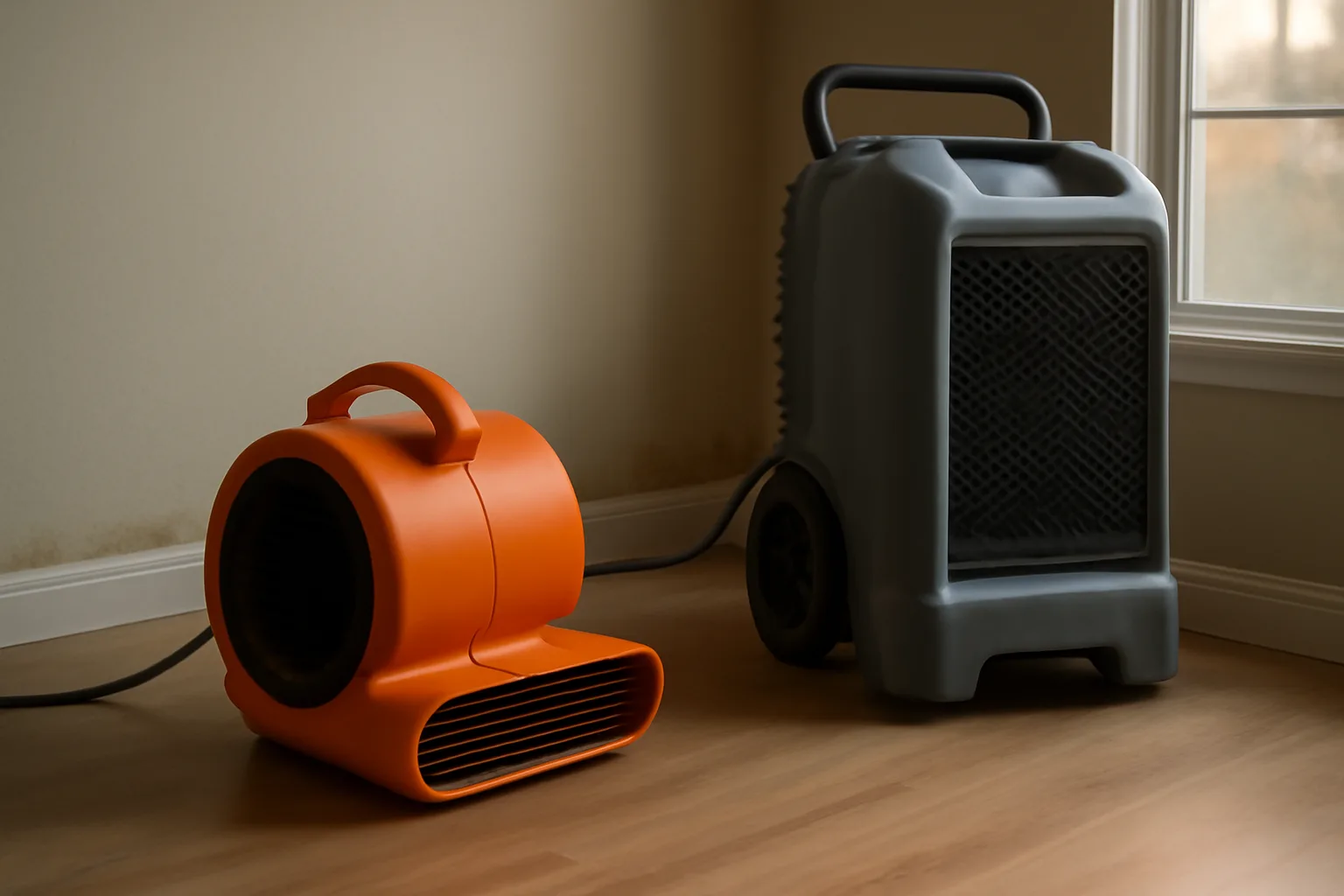
After a Monmouth County storm, the immediate risk is everything the breach lets in next — more rain, more wind, more water. We extract the floodwater, dehumidify the saturated assemblies, and keep the building sealed until the permanent repairs are made. A Monmouth County power outage during a storm disables sump pumps, so we arrive prepared to pump out what they could not. Our file shows the temporary repairs separately from the mitigation, so the adjuster sees the full emergency response. Call 551-237-7564 and a Eatontown crew rolls out as the storm passes.
Stabilizing What The Storm Opened Up
The damage is rarely done when the wind stops — the water it let in keeps working for hours. Leaving a property open because "the crew comes tomorrow" is how a contained loss becomes a gut job.
We get a tarp over the opening fast, then turn to the standing water before it migrates further into the structure. We record the temporary repairs separately from the mitigation so the carrier sees the full emergency response.
What To Do In The First Hour
After a storm, the order you do things in matters as much as the things themselves. Document the damage before moving anything, get the breach covered, and start the claim before debris gets cleared.
Throwing out damaged contents before they are documented and signing over your claim are the two costliest early errors. We give the carrier a complete record of the storm loss so the right coverage applies without a fight.
Reading A Storm Claim Honestly — What To Expect
Whether a storm claim is paid frequently comes down to how the water got in — through a breach, or up from below. Misclassify a storm loss and the claim stalls; document the entry point and the carrier has the cause in front of it.
We record the storm conditions alongside the damage, so the cause is established and not left open to question. That accuracy is what keeps a storm claim from being second-guessed and the right policy from being denied.
What your policy pays after a storm hinges on cause, which is exactly why the point of entry has to be documented. Built correctly, the storm claim moves without rounds of dispute over what the wind did versus what the water did. We record the storm conditions alongside the damage, so the cause is established and not left open to question. A power outage that disables a sump pump complicates the picture, so the sequence of events matters as much as the damage.
The Cost Of Leaving It Open — Worth Knowing
Until the building envelope is sealed, every hour of weather adds to the loss, so stabilization comes before any drying. The cost of waiting to stabilize is paid later as the demolition and rebuild that the continued exposure required.
We get a weatherproof cover over the opening fast, so the loss stops growing while the extraction and drying begin. A property secured the same day is a manageable loss; one left open is an open-ended one.
The damage from a storm is rarely done when the wind stops — the open breach keeps the loss growing on its own. That is why our storm response opens with board-up and tarping, not with drying — the exposure cannot wait. Stabilization is the first move on every storm loss, because nothing else matters while the weather is still getting in. The cost of waiting to stabilize is paid later as the demolition and rebuild that the continued exposure required.
What A Good First Hour Looks Like — The Essentials
A few right moves in the first hour are worth more to a storm claim than anything that happens later. Capture the damage, stabilize the opening, and contact your insurer — in that order — before any rebuild work starts.
Do not sign assignment-of-benefits paperwork from a contractor who appears unsolicited — storm-chasers trail major weather for exactly that. Our crew gets there fast, secures the property, and builds the file the adjuster needs — without any AOB games.
The most expensive storm mistakes tend to happen in the first hour, before any crew or adjuster shows up. We dispatch immediately, document the loss to carrier standard, and never ask you to sign over your claim to get help. Resist the pressure to commit on the spot; legitimate crews do not need your signature in the driveway. Document the damage widely before moving anything, get the breach covered, and report the claim before debris is cleared.
Where this service connects to the rest
A {city} loss tends to spill past a single service line — storm damage restoration often overlaps with water extraction, soot removal, mold removal, sewage backup recovery, finish carpentry and rebuild, and we run all of it without a handoff. The same crew dispatches to and everywhere else across Monmouth County.
If you searched for restoration company near Eatontown, Whichever you need, a crew that meters and documents takes it from there, and we take it from there. Call 551-237-7564 any hour, read How a Eatontown Water Loss Turns Into a Mold Problem on our blog, or head back to our Eatontown home page to see everything we do.